Back Through the Mirror, Fendi Cruise 2027
Cruise was built for leaving. The pre-season collection began life as clothes for the wealthy migrating south for the winter, and over the past decade it has become fashion's grandest touring production: a palazzo here, a desert there, a few hundred guests flown in to watch models walk past a view. The destination is the message. The clothes, too often, are souvenirs of it.
For her first Cruise collection at Fendi, Maria Grazia Chiuri declined the itinerary. Cruise 2027 was released from Rome at the end of May through a lookbook and a short film rather than a destination show. Geographically, it travels no distance at all. In every other sense, it covers roughly half a century, and the considerable distance between a woman looking at a city and a woman looking at herself.
Chiuri, born in Rome in 1964, arrived at Fendi in 1989. The house was still run by the five sisters, Paola, Anna, Franca, Carla and Alda, who had inherited the fur and leather business their parents, Adele and Edoardo Fendi, opened in Rome in 1925. She spent a decade in accessories, the decade in which Fendi's leather goods stopped being merely desirable and became a phenomenon. She was in the studio in 1997 when the Baguette, the small underarm bag credited to Silvia Venturini Fendi, arrived and redrew the decade's idea of a handbag.
In 1999 she left with her design partner, Pierpaolo Piccioli, for Valentino, another Roman house, where the pair eventually rose to co-creative directors. In 2016 she went to Paris as the first woman to lead womenswear at Dior. She opened with a T-shirt borrowing Chimamanda Ngozi Adichie's line, "We Should All Be Feminists", and spent nine years turning the house into a platform for collaboration with women artists. She left in May 2025, staging her final Dior show at Villa Albani in her home city. By October she was back at Fendi as chief creative officer, overseeing womenswear, couture and accessories, with Silvia Venturini Fendi stepping back to the role of honorary president.
Her first Fendi collection, for Autumn/Winter 2026, was shown in Milan on 25 February under a four-word motto: "Less I, more us." It read as a statement of position. It was a correction, perhaps, to an industry that markets its creative directors as auteurs, and to a house whose modern identity was shaped by one of fashion's most famous: Karl Lagerfeld, who designed for Fendi from 1965 until his death in 2019.
If February was the declaration, Cruise is the clarification. The house's own notes describe the collection as a project still being refined, the synthesis of a journey rather than its destination. That modesty is strategic. It is also, as the film makes clear, something more personal.
To understand what Chiuri has done, start with the film she is answering. In 1977 Lagerfeld, twelve years into his Fendi tenure, was preparing the house's first ready-to-wear collection. The idea for how to present it was, by most accounts, his. The script and direction fell to Jacques de Bascher, the elusive Parisian dandy who was Lagerfeld's companion until de Bascher's death in 1989.
The result was Histoire d'Eau, an eighteen-minute short in which the model Susy Dyson plays a German tourist adrift in a Rome emptied of people. She strolls, dances and bathes in the city's fountains. Eventually she is invited to try on Fendi furs and ends up at lunch with the five sisters, the fiction briefly giving way to the family itself.
The film is routinely described as the first fashion film. That is a generous claim. Diane Pernet, the critic and fashion-film curator, has long pointed to William Klein's Who Are You, Polly Maggoo? of 1966. It becomes a fair one if the word "branded" is added: a house paid for a film to launch a collection, and ended up with something stranger and better than an advertisement.
Its afterlife matters here. Fendi restored the film in 2013 and screened it in Paris alongside The Glory of Water, Lagerfeld's photographs of Roman fountains, as part of the house's Fendi for Fountains restoration programme. It has been quarried since: Kim Jones drew on it for Fendi's centenary Summer 2025 collection, lifting its red coral motif. Chiuri is not the first to go back to the fountain. What distinguishes her return is that she drains it.
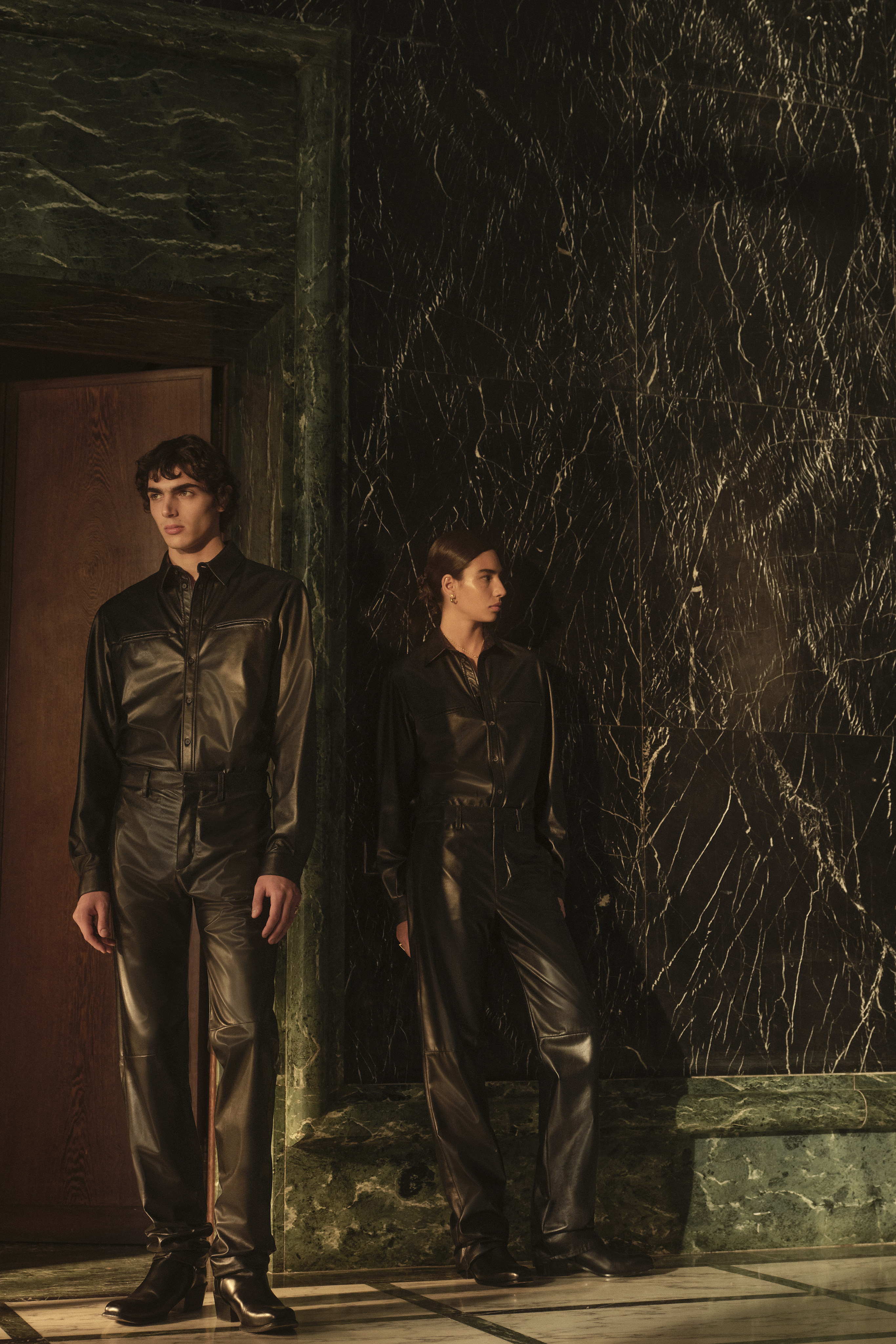
Chiuri's film, Oltre lo Specchio (Beyond the Mirror), directed by Davide Rosano, keeps the heroine and loses the water. Its Suzie, as the house now spells her, does not drift through sunlit piazzas. At an undefined hour, in a light borrowed from Paul Delvaux's deserted railway stations, she walks slowly into an empty Roman building of the early twentieth century, all marble and rationalist restraint.
The film never names the building. It hardly needs to. Anyone who knows the house will think of Fendi's own headquarters, the Palazzo della Civiltà Italiana in EUR, the so-called Square Colosseum, which the brand has occupied since 2015. Whether or not the cameras were there, it is the right ghost to have in the room: an architecture that, like Latin, prizes compression, and in which nothing appears that does not need to.
Inside, the film becomes something closer to painting in motion. Staircases loom like keyboards. Figures appear, vanish and reappear, and several of them are versions of Suzie herself. The Italian writer Rosa Matteucci, whose essay accompanies the collection, reaches for Kubrick and Sokurov, for Respighi's Fountains of Rome, and for the Garuda, the great winged figure of Hindu and Buddhist myth. The prose is operatic, occasionally overwrought, and entirely in key with the images. Draped in feathered black, Suzie ends by shedding her plumage, leaving the building and, in Matteucci's telling, taking flight.
Here is the inversion that makes the project interesting. In 1977 a woman looked at Rome and, through imagination and a Carl Zeiss lens, turned it into a dream of somewhere else. In 2026 a woman looks into the mirror of the title and finds not one figure but many. De Bascher's Susy was a muse, filmed by a man to launch a collection designed by a man. Chiuri's Suzie is a crowd. "Less I, more us", rendered in moving image.
It is not without tension. Matteucci's essay still speaks of the Woman, capital W, unique and unrepeatable: the language of the muse that Chiuri spent her Dior years taking apart. And the film's hypnotic control can tip into chill; at least one reviewer has noted that its restraint occasionally borders on emotional distance. That is a fair charge. But a cool film for Cruise, a genre addicted to sunshine, is also a deliberate one.
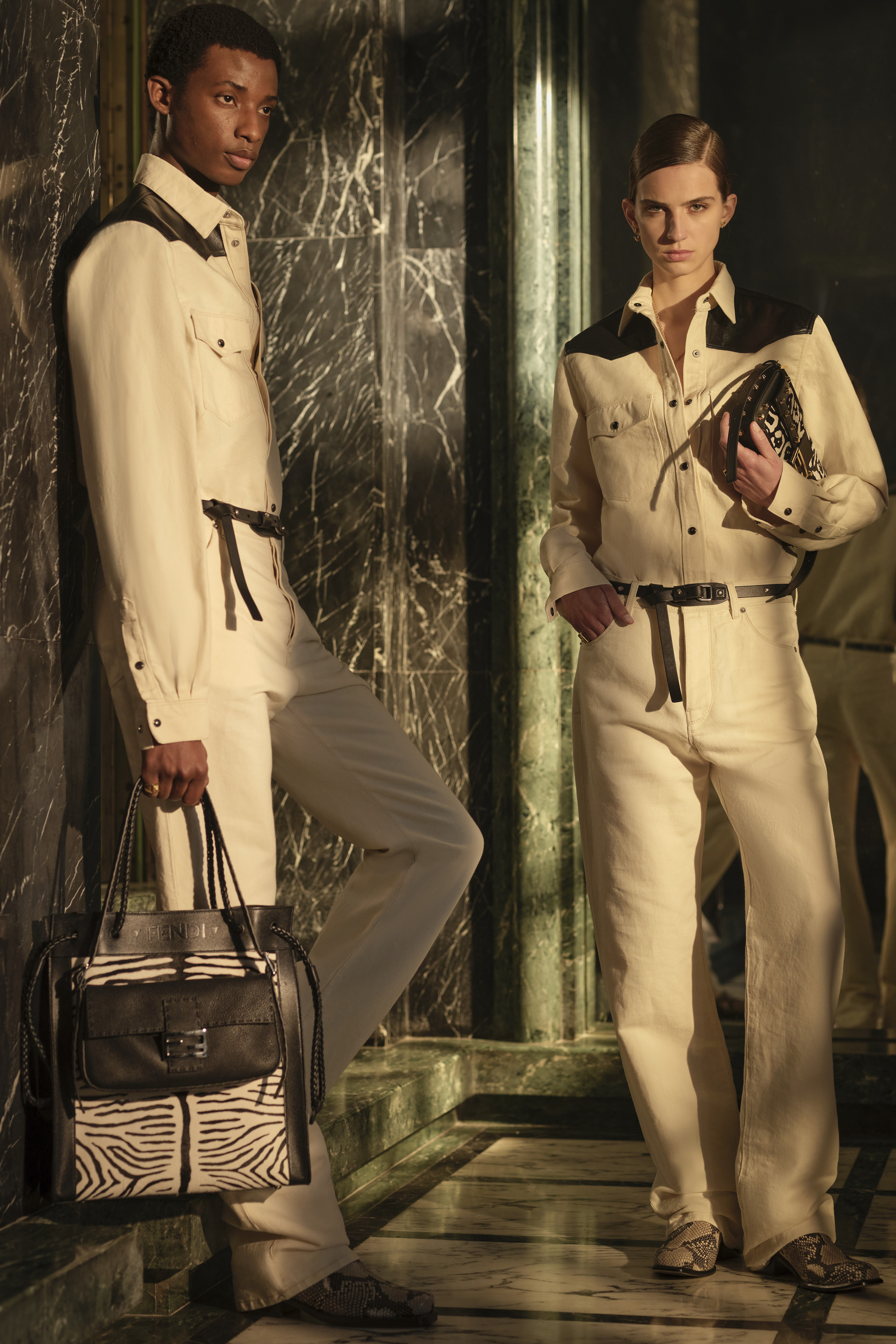
The clothes make the argument more plainly. Chiuri has framed them with an unfashionable word: bourgeoisie. In fashion it usually arrives with a sneer, or as a styling trope of pussybows and pearls. Chiuri uses it as a category of modernity, broad enough to hold different bodies, generations and desires. It is a pragmatist's word. The bourgeoisie, after all, are the people who actually wear their clothes, repeatedly, for years.
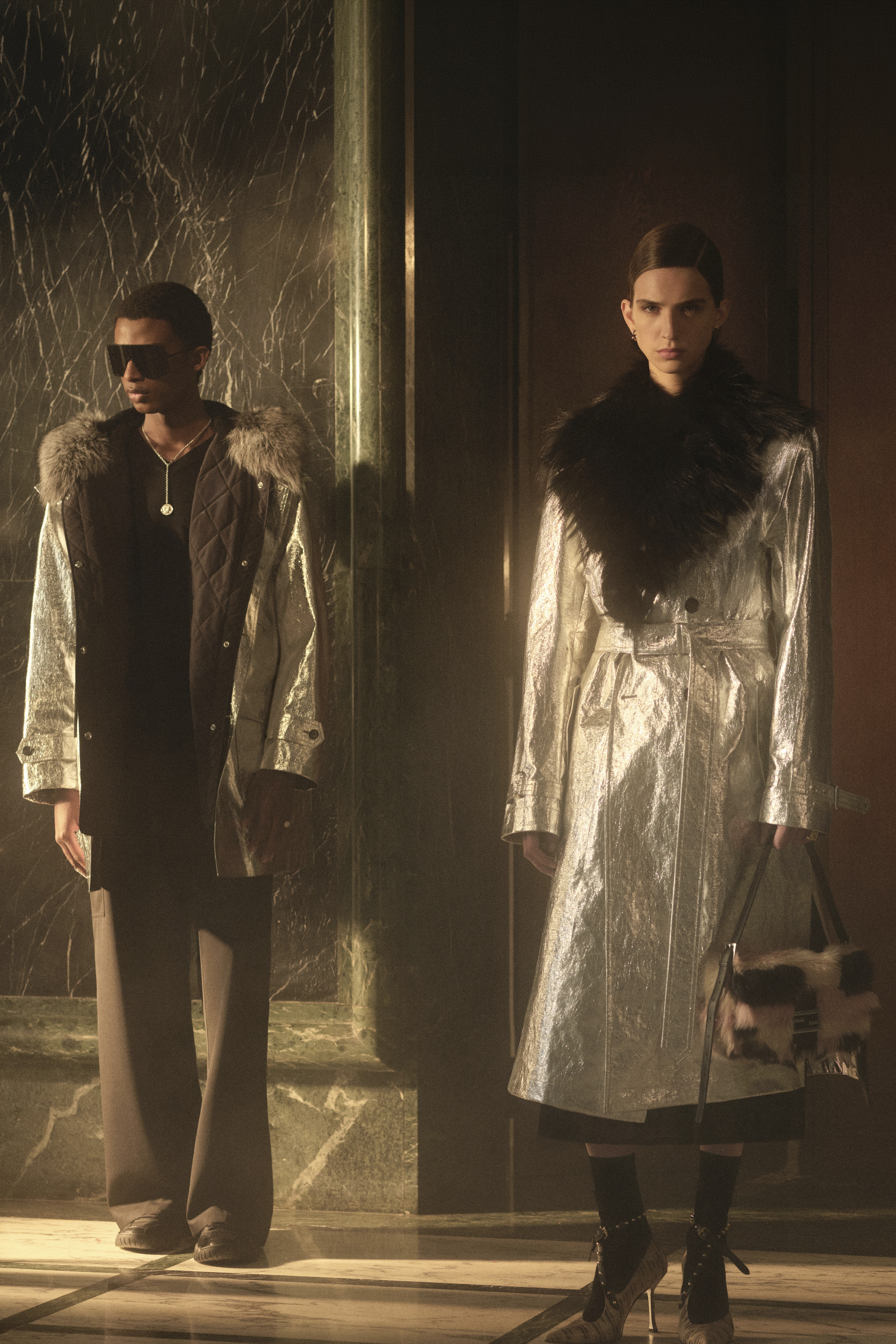
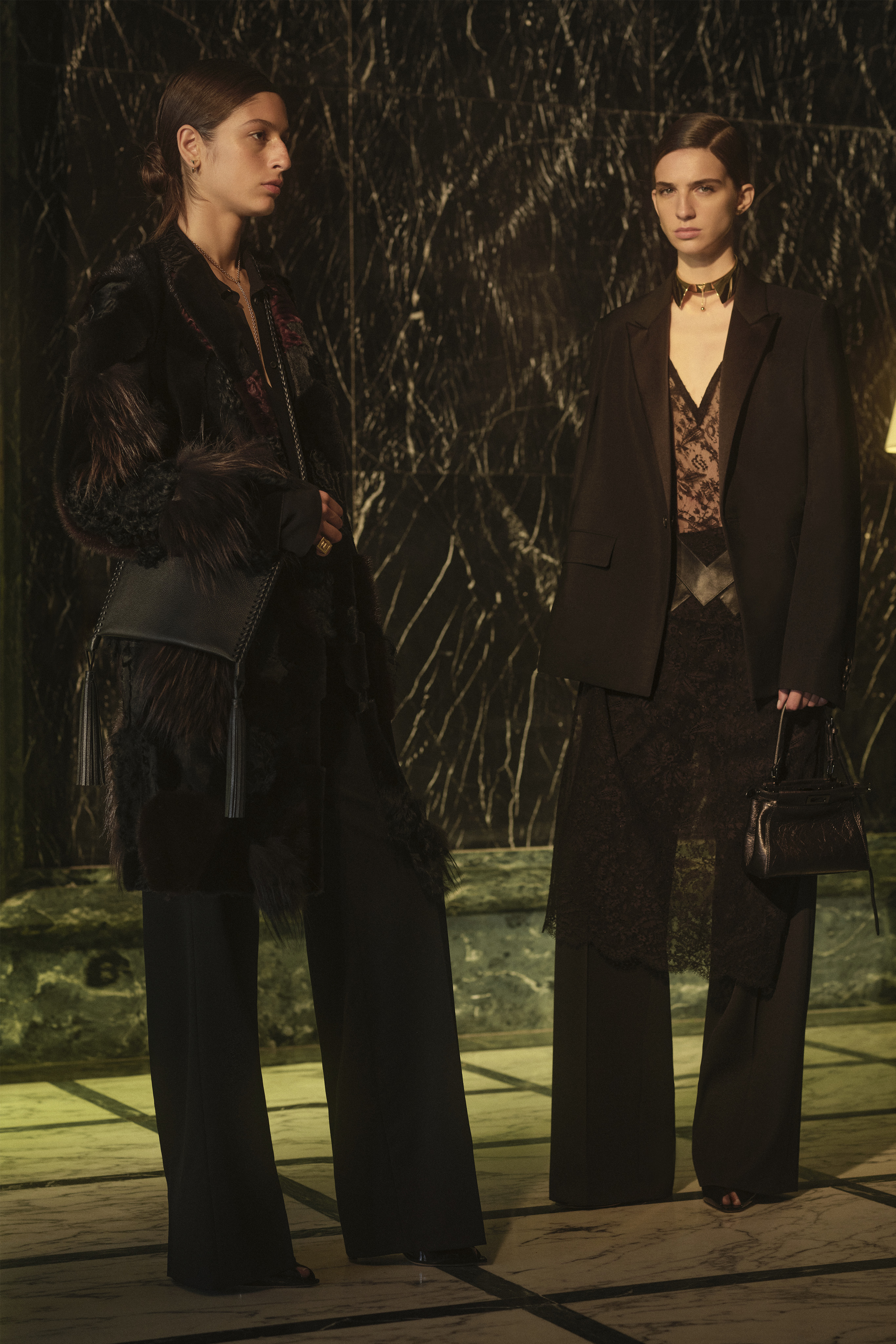
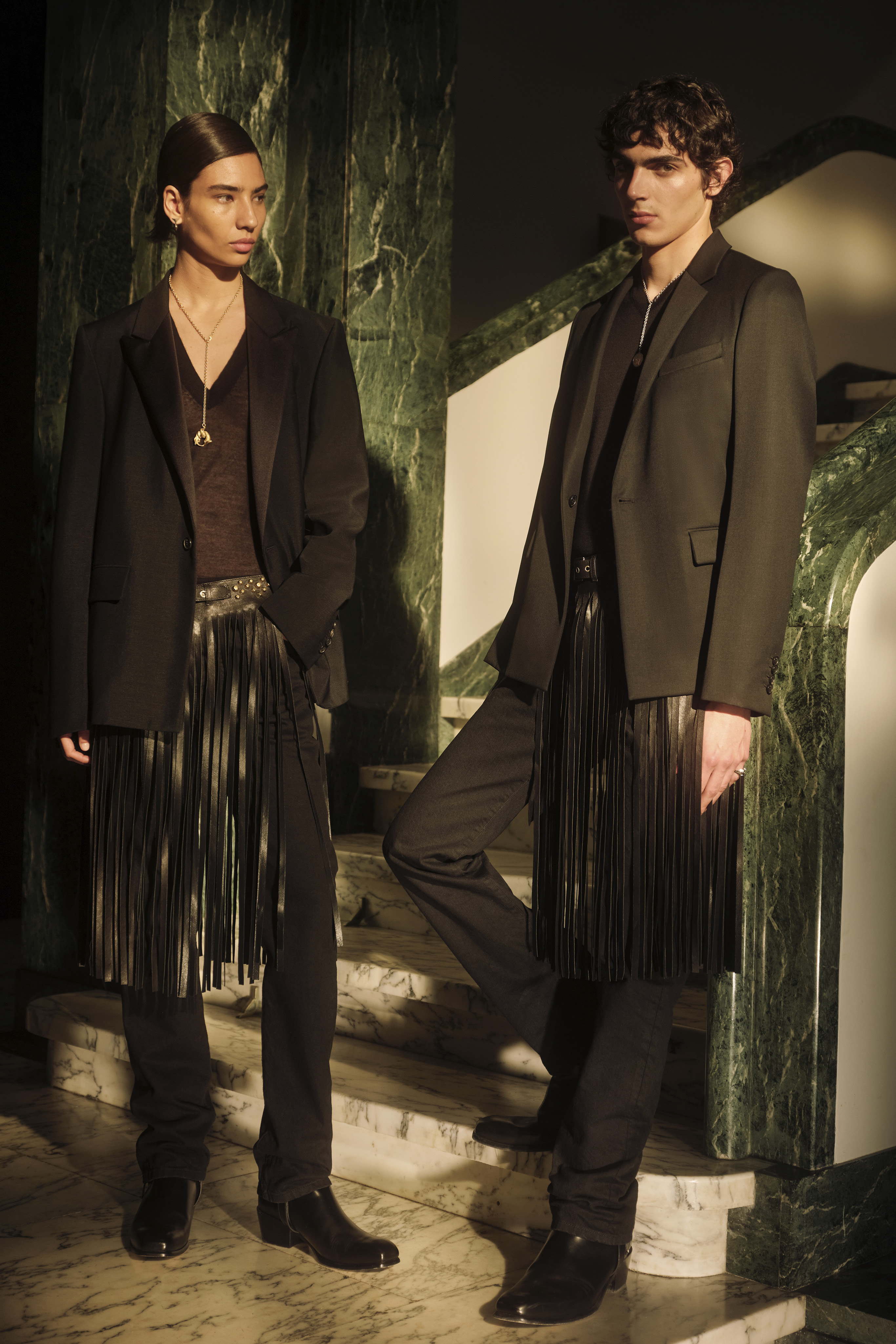
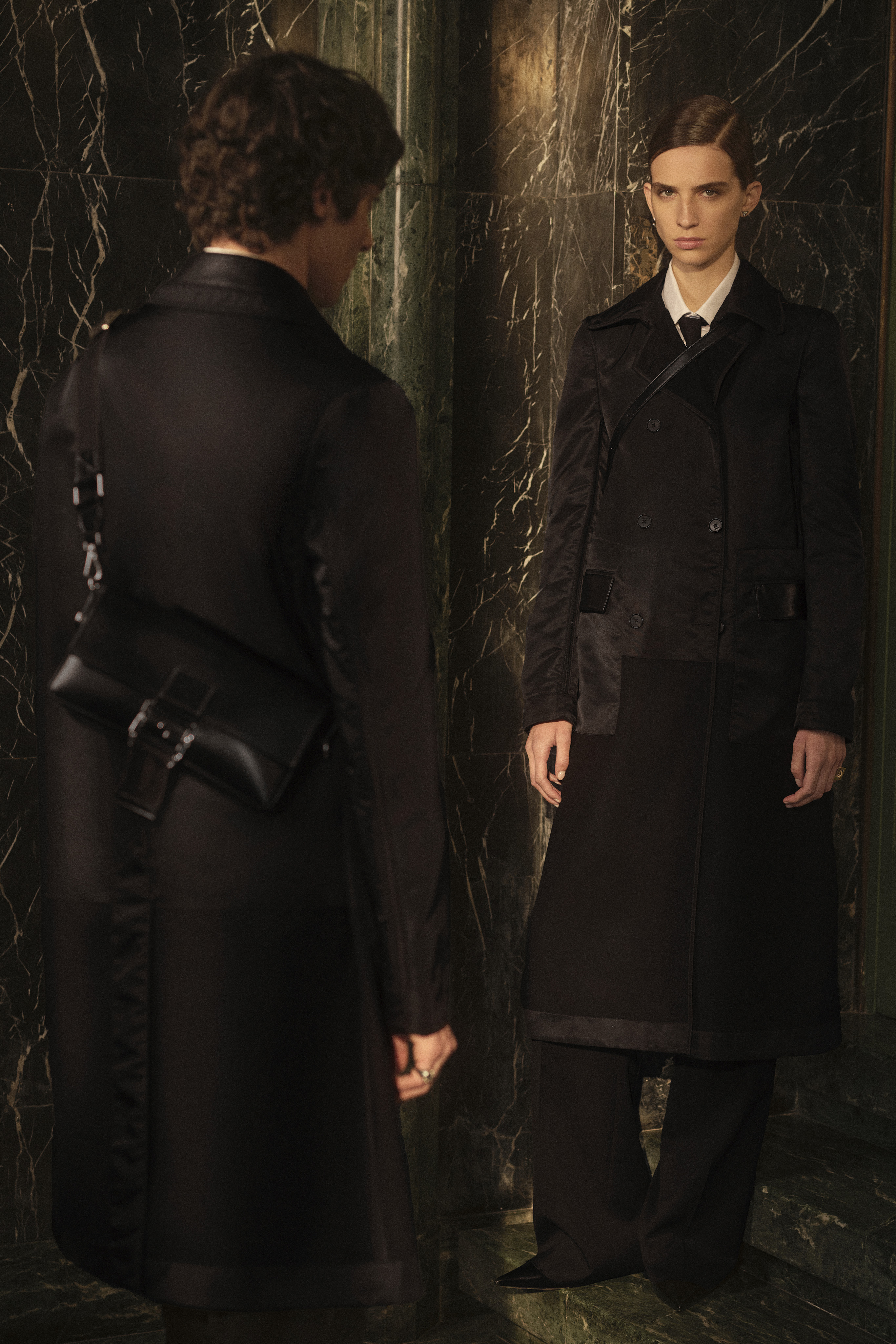
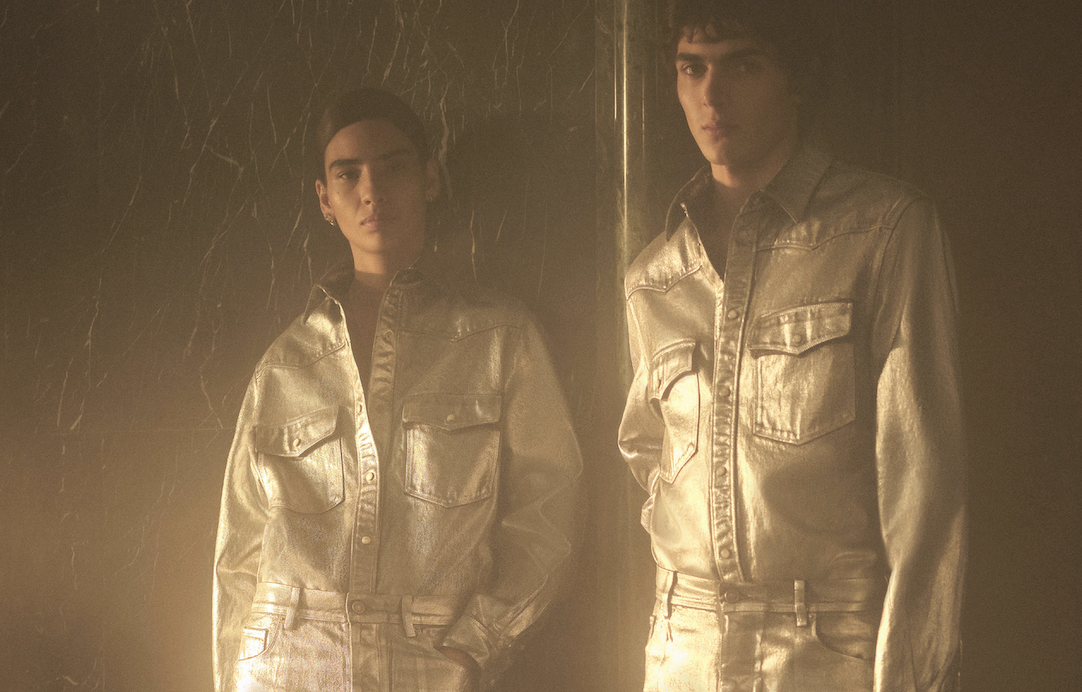
That pragmatism shows in the construction. Men and women walk side by side in pieces that cross over. A shirt and trousers are cut so that, at first glance, they read as a single garment: a uniform designed to be taken apart and reassembled to need. It extends a line from February, when double-breasted dresses, suits and coats moved freely between the women's and men's collections.
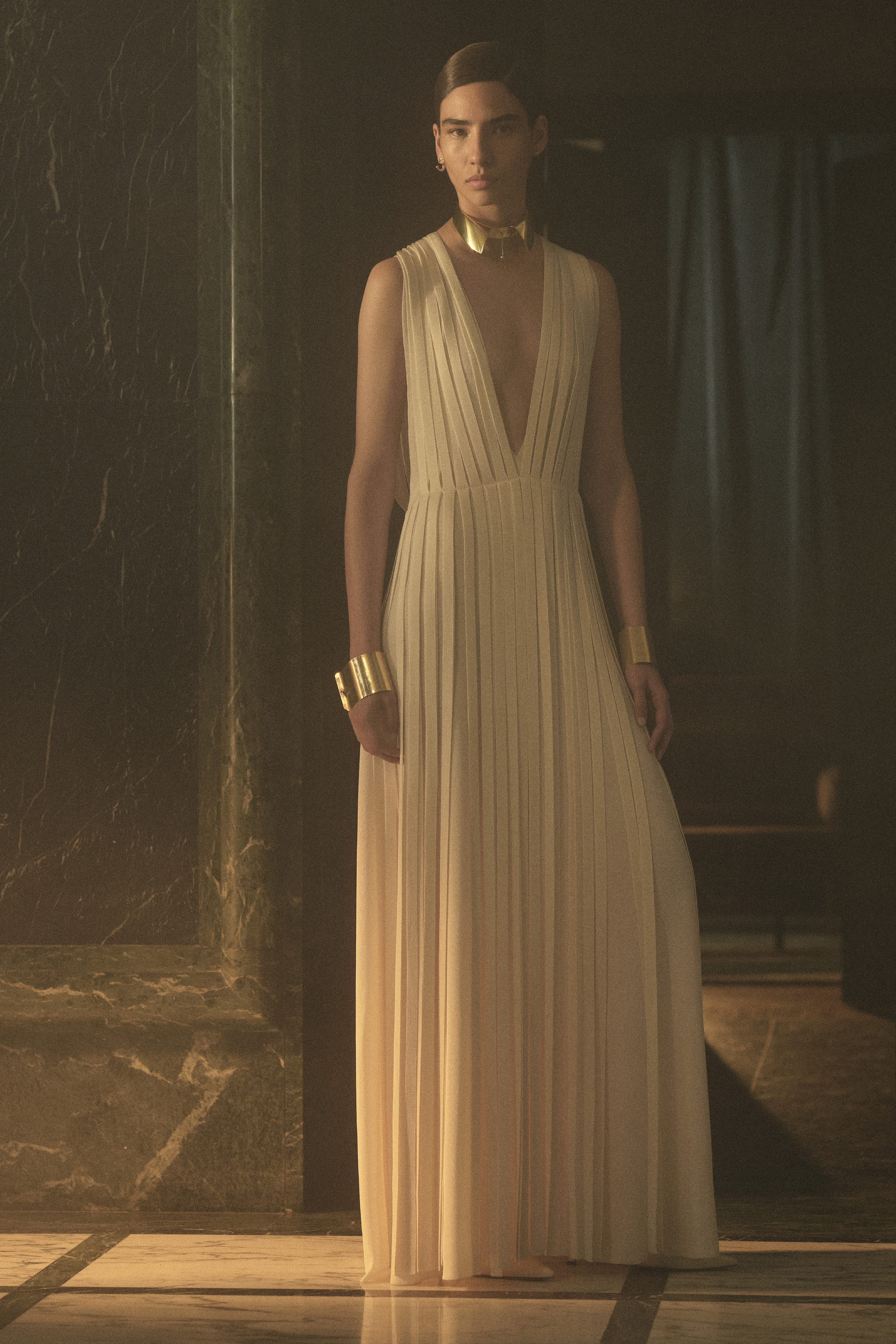
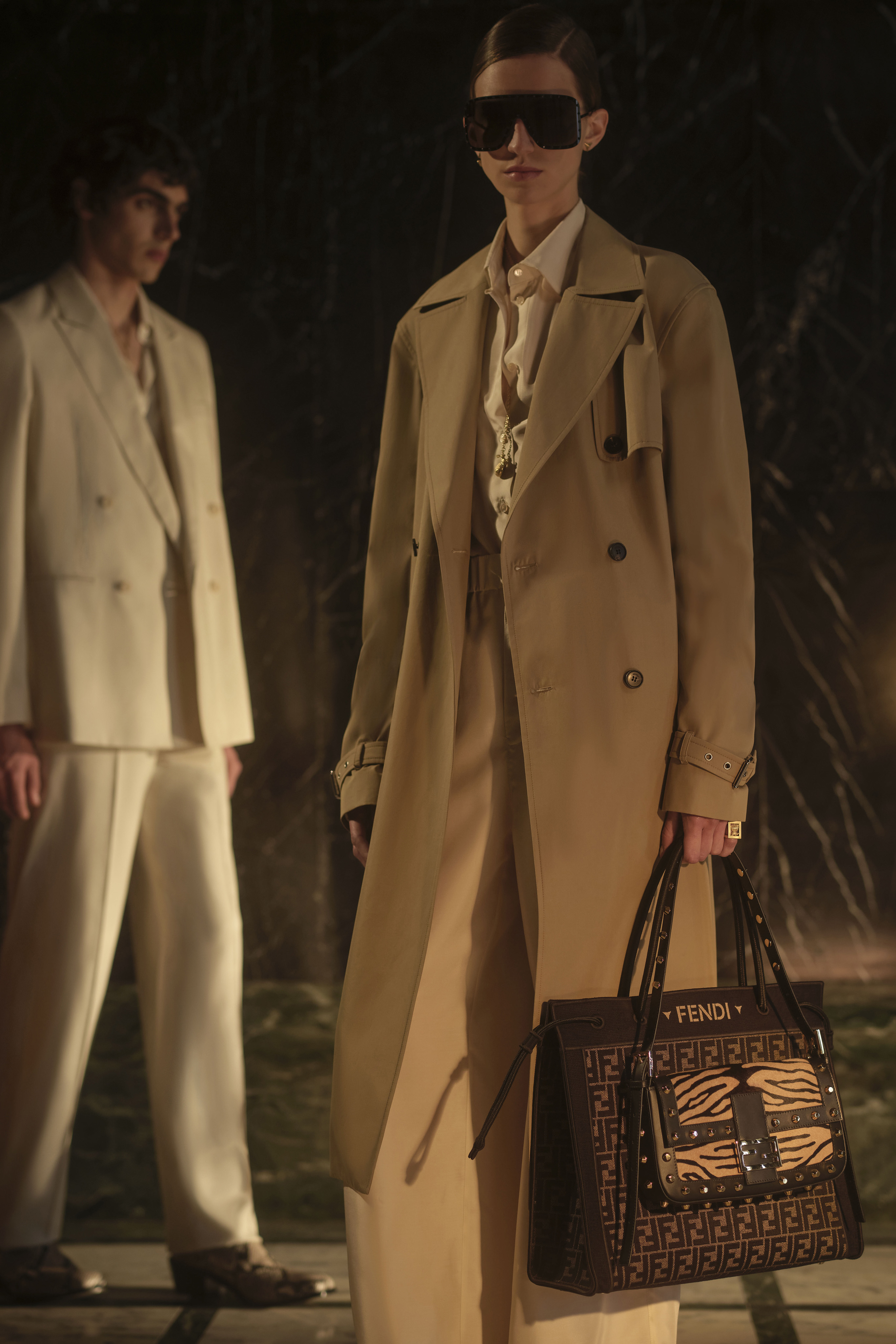
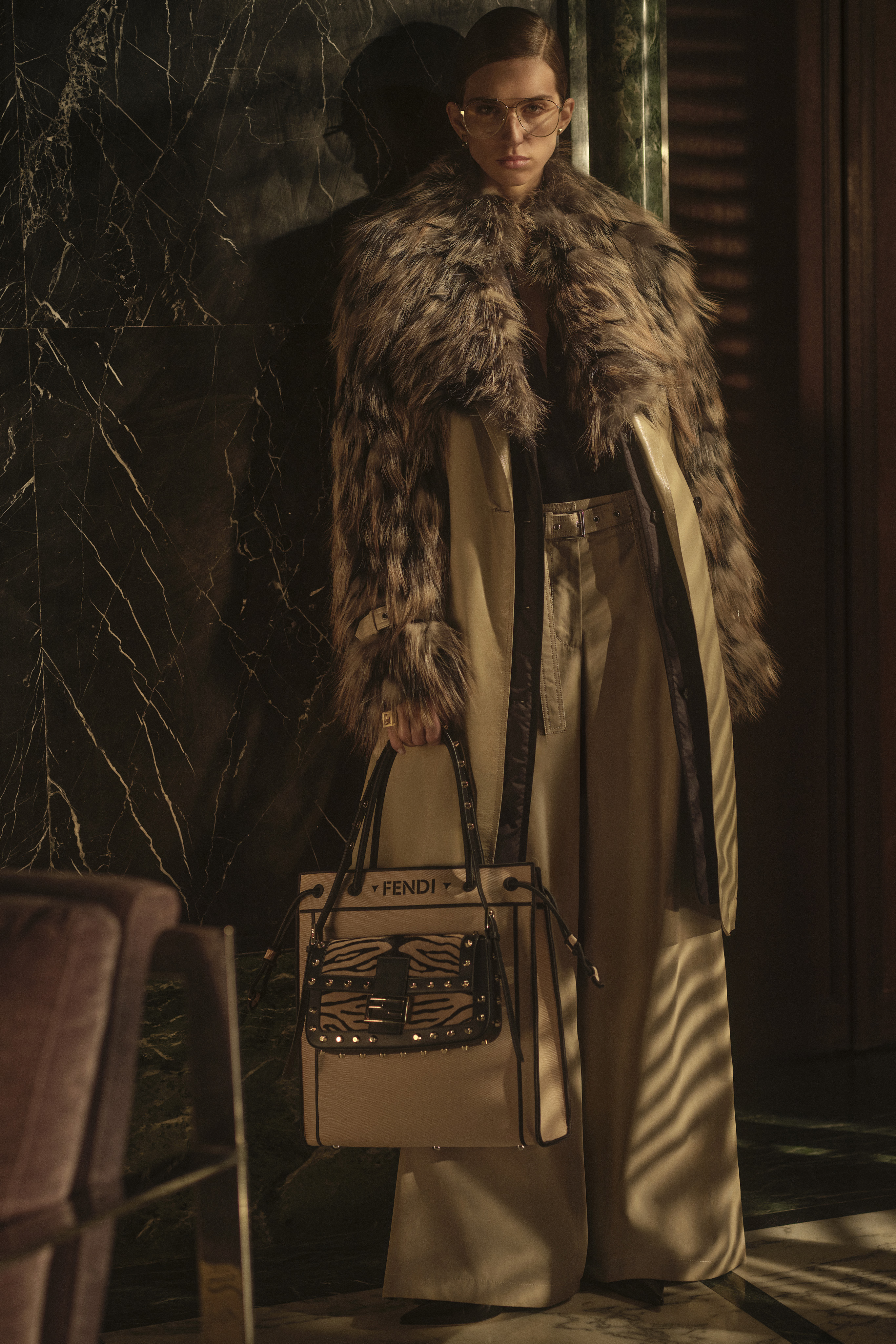
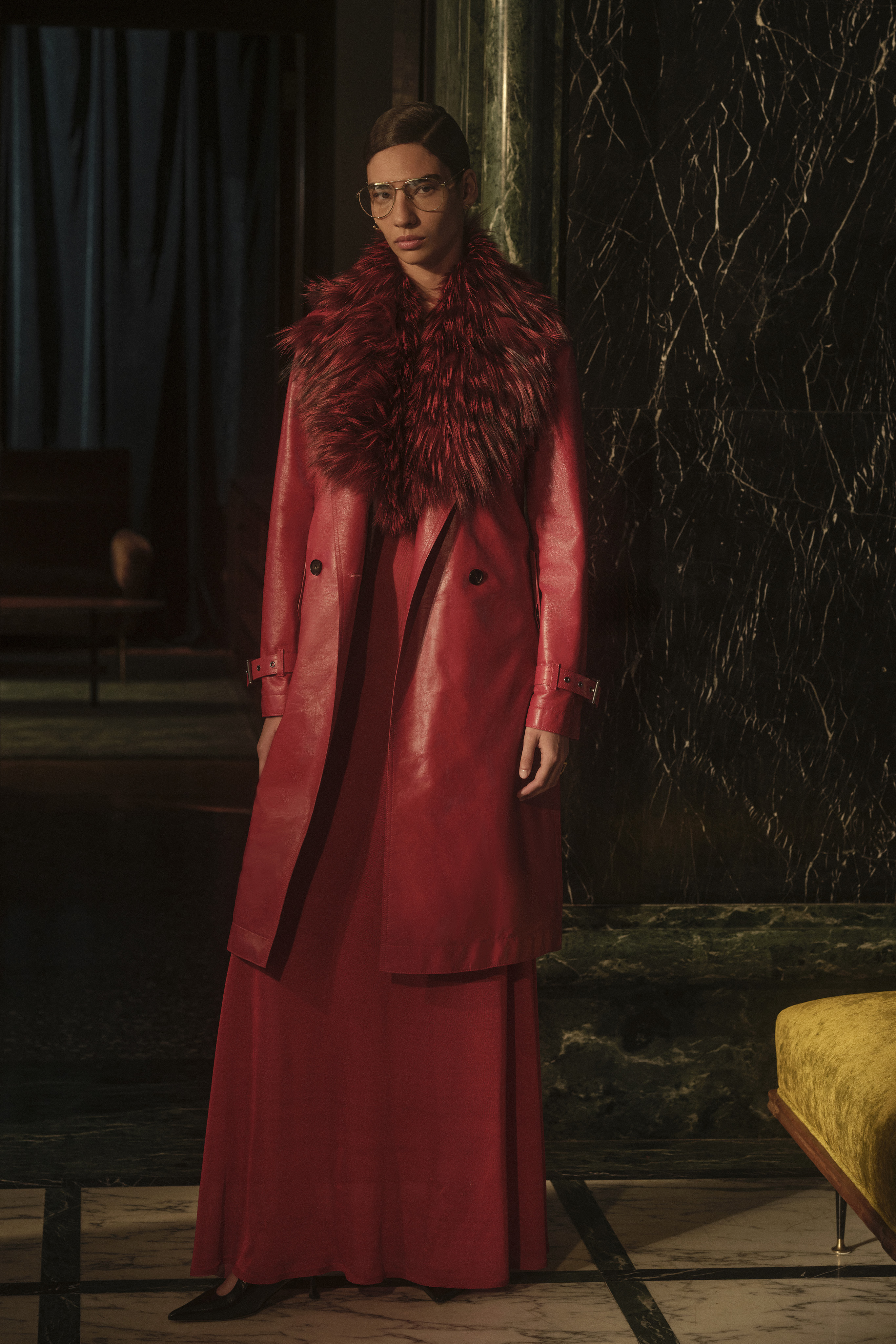
Then there are the materials. Parchment, long part of the house's vocabulary, is the collection's key. In accessories it meets studded black leather; in clothing it becomes a colour, set against black throughout. Elsewhere Chiuri bends familiar grammar into new syntax. A georgette dress acquires a leather plastron, the breastplate turning softness into armour. The trench, that most settled of wardrobe staples, is rebuilt in stripes of fur and punctuated with wedge studs. Shiny leather is set against matte cloth to change how a jacket holds the light. The evening pieces, in silver lace and sequin embroidery, glint rather than blaze.
The palette is near-monastic: black and white, softened by beige, interrupted now and then by red, blue or purple. Threading through it is the Tree of Life, used less as print than as emblem, a utopian sign for nature, humanity, reason and coexistence. In less disciplined hands it would be sentimental. Here it reads as a quiet coda to the motto.
The clothes have already been tested where it counts. At Venice in September, the actress and director Greta Scarano, the festival's madrina, wore a Cruise 2027 embroidered tunic over wide tuxedo trousers. It turned the collection's thinking on interchangeability into a red-carpet proposition, and a persuasive one.
No Fendi collection escapes the Baguette, and Chiuri does not try. The bag has had several lives: the late-Nineties It bag, the cult object of Sex and the City, the reissue, the Y2K nostalgia piece of recent seasons. Chiuri's reactivated version is darker, parchment set against studded black leather, and conspicuously unplayful. It is the Baguette as heirloom rather than meme.
There is a commercial logic, of course. Fendi belongs to LVMH, the bag is the house's best-known asset, and its chief executive, Ramon Ros, has framed a single creative direction as a route to consistency. But there is a personal logic too. Chiuri was in the accessories studio when the Baguette was born. Few designers are given the chance to revise their own youth.
The larger question is whether "Less I, more us" suits a house so shaped by one authorial voice. Lagerfeld's fifty-four years at Fendi remain one of the longest designer-house partnerships in fashion. His wit, speed and technical audacity, with fur above all, are the brand's inheritance. Chiuri's method is slower and more collective, and her critics at Dior often argued that her clothes were more wearable than revelatory.
At Fendi, that charge reads differently. What looked like caution in Paris looks, in Rome, like method: a designer clarifying a wardrobe before she decorates it. Cruise 2027 is less a reset than a recalibration, and it is the more convincing for its patience.
Cruise 2027 is not a spectacle, and it is not trying to be one. It is a collection about returning, to a house, an archive, a city and a film, and about what changes when the person returning is no longer the young designer who left. In 1977 Fendi's heroine dreamed Rome into somewhere else. In 2026 she walks out of a marble building, leaves her feathers behind and moves, as Matteucci has it, "towards her own closing credits".
Cruise was invented for people who leave. Chiuri's first stays at home, and is the more adventurous for it. Sometimes the furthest a collection can travel is back through the mirror.