
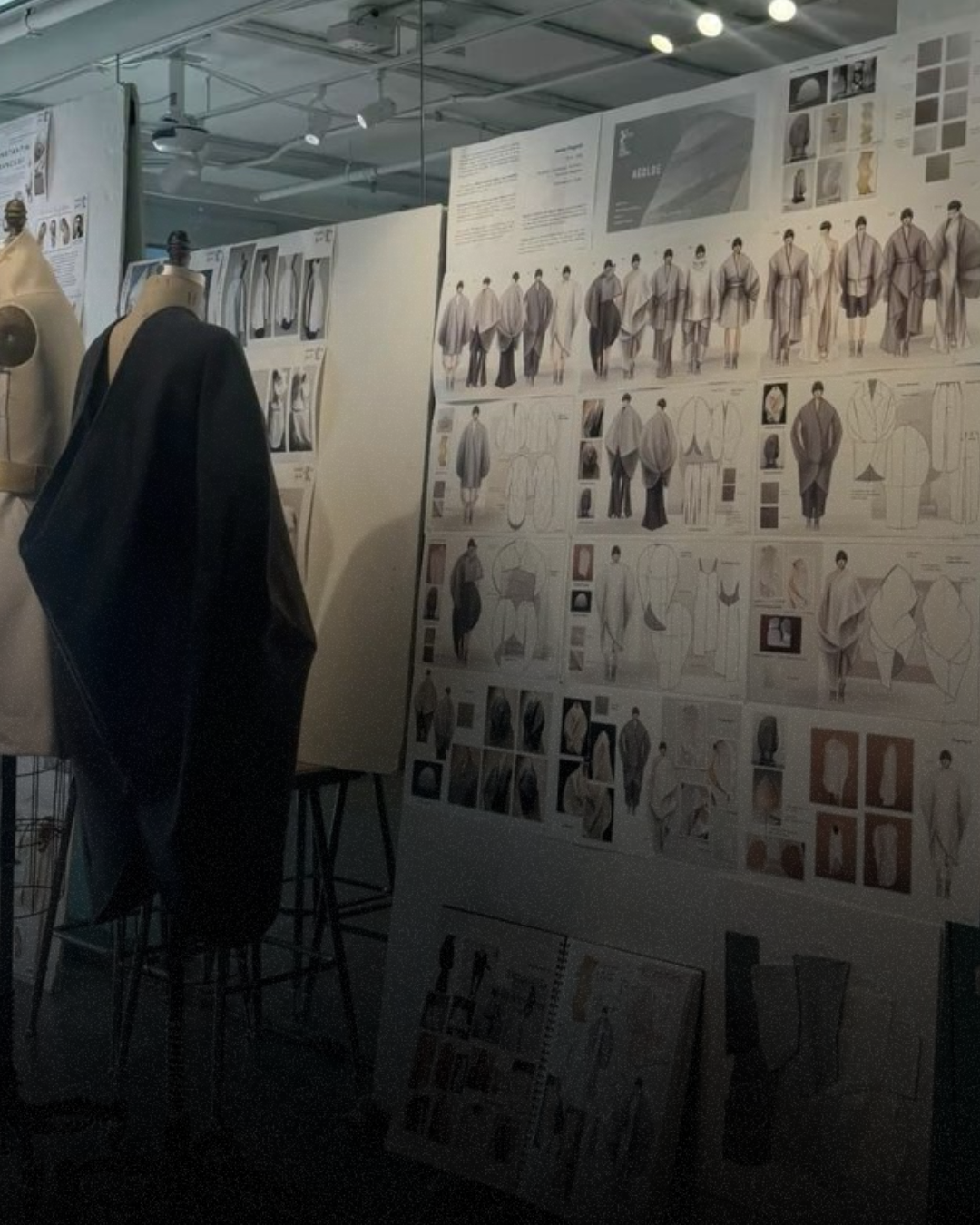
Is Fashion School Still Worth It?
For decades, there was a fairly established route into fashion. You studied the craft, built a portfolio, completed internships and, if everything went well, found your way into a fashion house, magazine, studio or agency. Fashion school was more than an education; it was often considered the entry point into an industry that could otherwise feel almost impossible to access.
Today, that route looks far less straightforward.
The fashion industry has undergone one of its most significant transformations in recent history. Social media has changed how talent is discovered. E-commerce has made launching a label possible without a traditional retail network. Digital platforms have made knowledge that was once confined to classrooms widely accessible. And perhaps most importantly, the definition of a "fashion career" has expanded far beyond becoming a designer.
There are creative directors, stylists, photographers, buyers, brand strategists, fashion journalists, content creators, entrepreneurs, consultants, producers and digital specialists all operating within the same ecosystem. Some arrived through prestigious fashion schools. Others built their careers almost entirely outside them.
It raises an increasingly relevant question: is fashion school still worth it?
What Fashion School Still Gets Right
There is a reason institutions such as Central Saint Martins, Parsons School of Design and London College of Fashion continue to attract students from around the world.
Fashion is not simply about having good taste.
Designing a garment requires an understanding of construction, proportion, textiles, pattern cutting and fit. Creative direction requires an understanding of references, visual language and cultural context. Fashion business demands knowledge of merchandising, production, marketing, pricing and consumer behaviour.
A structured education gives students the opportunity to develop those skills systematically rather than attempting to piece them together alone.
It also provides something considerably harder to find online: an environment in which your work is constantly challenged.
Students present ideas, receive criticism, start again, collaborate with people whose perspectives differ from their own and learn how to defend creative decisions. That process can be uncomfortable, but it is often where a distinctive creative identity begins to emerge.
Then there is the network.
Fashion has always been an industry built heavily around relationships. The person sitting beside you in a university studio could eventually become a stylist, editor, buyer, photographer or designer. Tutors may have industry experience. Visiting professionals can become future contacts. Internships can become jobs.
In that sense, part of what students are paying for is not simply education. They are entering an ecosystem.
But the Gatekeepers Have Changed
The difference today is that fashion school is no longer the only way into that ecosystem.
A generation ago, getting your work in front of influential people often depended on physical proximity. You needed to be in the right city, attend the right school, secure the right internship or somehow get your portfolio onto the right desk.
The internet has disrupted much of that hierarchy.
Instagram can function as a constantly evolving portfolio. TikTok can turn an unknown designer into a name watched by thousands. A stylist can publish their work without waiting for a magazine commission. A photographer can develop a recognisable visual identity online. An independent label can sell directly to customers across different countries without first convincing a major retailer to stock it.
Someone with a phone, an idea and an understanding of digital culture now has access to an audience that previous generations could only reach through established institutions.
That does not necessarily make building a career easier. In many ways, it makes it more competitive. When everyone can publish, everyone is competing for attention.
But access has undeniably changed.
The Rise of the Self-Taught Creative
There has also been a fundamental shift in how people learn.
Technical tutorials, digital courses, interviews, archives, lectures and specialist communities have made enormous amounts of information available beyond formal education. Someone interested in fashion photography can study thousands of references online. An aspiring entrepreneur can learn about manufacturing, branding and e-commerce while simultaneously building a business.
More importantly, they can test those lessons immediately.
That ability to learn while doing has created a different kind of fashion education: one built through experimentation.
Launch something. See whether people respond. Photograph it differently. Change the product. Study the analytics. Build a community. Make mistakes. Try again.
The feedback is immediate and often unforgiving, but it is real.
For certain areas of the industry, particularly content, marketing, styling, communications and entrepreneurship, that practical experience can become enormously valuable.
A Degree Is No Longer the Entire Portfolio
This may be the biggest change of all.
A qualification can demonstrate that someone has completed a respected programme, but employers and collaborators ultimately need to understand what that person can actually do.
What have you created?
What have you worked on?
How do you think?
What makes your perspective different?
Can you respond to a brief?
Can you work with other people?
Do you understand the culture surrounding fashion rather than simply its aesthetics?
A strong portfolio can answer many of those questions far more effectively than a qualification alone.
The modern fashion professional is also increasingly expected to understand areas that were once considered separate disciplines. A designer may need to understand social media. A stylist may need to understand personal branding. A marketer needs cultural awareness. A founder needs to understand everything from storytelling and community to margins and supply chains.
The industry is increasingly rewarding people who can move between worlds.
Then There Is the Cost
It is impossible to discuss whether fashion school is "worth it" without discussing money.
Studying fashion can represent a significant financial commitment, particularly when tuition is combined with accommodation, materials, equipment and the cost of living in major fashion capitals.
That changes the equation.
If graduating means carrying significant financial pressure into an industry where entry-level salaries can be modest and career progression uncertain, students have every reason to question the return on that investment.
Could some of that money instead fund internships, specialist courses, travel, equipment or the first collection of an independent label?
For one person, university may provide opportunities they could never recreate independently. For another, several years of practical work may prove more valuable.
There is no universal calculation anymore.
Fashion School Cannot Manufacture Originality
Perhaps the most important distinction is between learning fashion and developing a point of view.
A school can teach construction. It can teach history, research methods, communication and business. It can introduce students to references and challenge them to think differently.
But originality is much more difficult to teach.
Some of fashion's most interesting emerging voices are compelling precisely because their work comes from personal experiences, communities, cultures and perspectives that cannot be reproduced through a syllabus.
This is particularly significant as fashion becomes increasingly global.
For decades, the industry's traditional centres held enormous influence over what was considered important. Today, designers and creatives from cities across the Middle East, Africa, Asia and Latin America can build international audiences while remaining connected to their own cultural contexts.
The next influential fashion voice does not necessarily have to emerge from Paris, Milan, London or New York.
And they do not necessarily need permission from the traditional fashion establishment to begin.
Social Media Is an Opportunity — Not a Substitute for Skill
There is, however, a danger in romanticising the alternative route.
Having an audience does not automatically make someone a skilled designer. Virality cannot replace understanding garment construction. A strong aesthetic on Instagram does not necessarily translate into the ability to build a commercially sustainable brand.
Digital visibility can open the door, but there still needs to be substance behind it.
In fact, the speed of social media arguably makes genuine expertise even more valuable. Trends can be copied within days. A particular visual language can spread across thousands of accounts almost instantly. What becomes harder to replicate is deep technical knowledge, original thinking and a clear understanding of why something is being created.
The strongest emerging creatives are often those who combine the accessibility of the digital world with the discipline traditionally associated with formal training.
Perhaps We're Asking the Wrong Question
Maybe the question is no longer whether fashion school is worth it.
Perhaps it is: what exactly are you expecting fashion school to give you?
If you want intensive technical training, access to specialist facilities, mentorship, structured criticism and a community of equally ambitious creatives, formal education can be incredibly valuable.
If your ambition lies in content, communications, entrepreneurship or another rapidly evolving part of the industry, there may be alternative routes involving internships, independent projects, short courses and hands-on experience.
And for many people, the strongest path may sit somewhere between the two.
Study, but work while studying.
Learn the theory, but build something outside the classroom.
Complete the degree, but do not expect the qualification itself to create the career.
Use social media, but treat it as a platform for your work rather than the work itself.
The New Fashion Education
The most significant shift may be that education no longer has a clear finish line.
Fashion moves too quickly for anyone to graduate knowing everything they will need for the rest of their career. Technology changes. Platforms disappear. Consumer behaviour evolves. New business models emerge. Cultural conversations shift.
The people who thrive are often those willing to remain students of the industry long after they have left the classroom.
Fashion school can provide an extraordinary foundation. What it can no longer guarantee is a career.
But perhaps it never really could.
The difference is that today's aspiring creatives have more ways than ever to build one themselves.
So, is fashion school still the best route into the industry or has experience become the new education?
Follow @djournal_magazine for more stories at the intersection of fashion, business and culture.