
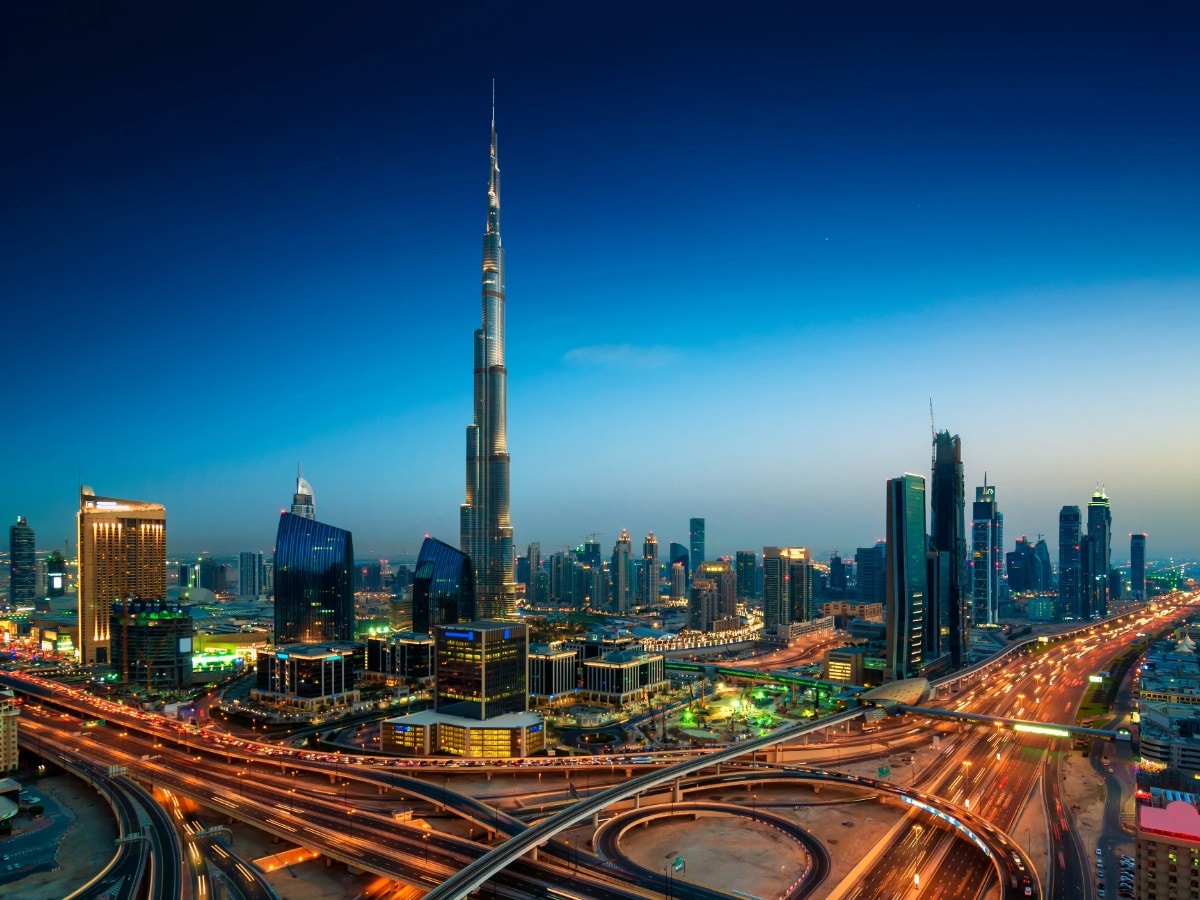
Why The World’s Wealthiest Entrepreneurs Keep Choosing Dubai
There was a time when Dubai was viewed as a city people passed through. A glamorous stop between continents. A destination associated with shopping, hospitality, sunshine and spectacle. But somewhere over the last two decades, that perception changed entirely. Quietly, strategically and almost without asking for permission, Dubai transformed itself into something far more powerful: a city where the world’s most ambitious people now choose to build their lives.
Today, for a growing number of billionaires, founders, investors and high-net-worth entrepreneurs, Dubai is no longer just a place to visit for a few weeks each winter. It has become a place to live permanently. A place to establish businesses, move capital, raise families, create networks and plan for the future. And increasingly, some of the world’s most influential entrepreneurs are choosing to call the city home.
What makes Dubai fascinating is that its appeal goes far beyond luxury. Luxury exists everywhere. London has legacy. Paris has romance. New York has power. Milan has fashion. Singapore has precision. But Dubai offers something many major cities have gradually lost over time: momentum. The city still feels like it is moving forward aggressively. It feels optimistic. It feels ambitious. And for entrepreneurs, ambition is magnetic.
Across many parts of the world, founders often speak about exhaustion with bureaucracy, political instability, rising crime, complicated taxation systems and cities that increasingly feel difficult to navigate. Dubai positioned itself as the opposite of that experience. It created an ecosystem built around efficiency, speed and possibility. Things move quickly here. Businesses launch quickly. Infrastructure develops quickly. Decisions happen quickly. And in industries where speed matters, that changes everything.
Of course, conversations about Dubai’s rise among the wealthy inevitably return to taxation. The UAE’s tax structure remains one of the strongest attractions for entrepreneurs and investors globally. The absence of personal income tax continues to position the country as one of the most financially attractive places in the world for wealth creation and wealth preservation. But reducing Dubai’s rise to taxes alone oversimplifies what is happening.
Wealthy people do not uproot their lives purely because of financial advantages. They move because of lifestyle. Because of safety. Because of opportunity. Because of quality of life. Taxes may initially attract entrepreneurs to Dubai, but the city itself is increasingly what convinces them to stay long term.
Safety, in particular, has quietly become one of Dubai’s most valuable luxury assets. In many global cities today, security and peace of mind have become increasingly rare commodities. Entrepreneurs relocating from cities across Europe, North America, Africa and Asia often describe the same feeling when speaking about Dubai: ease. The ability to walk comfortably late at night. The ability to raise children in a city perceived as safe and stable. The ability to exist without the constant tension that now defines many major metropolitan centres around the world.
And modern wealth has evolved significantly. The world’s wealthiest individuals are no longer only searching for visible displays of status. Increasingly, luxury is being redefined through privacy, wellness, calmness, convenience and time efficiency. Dubai understands this shift exceptionally well. The city has become highly skilled at creating environments where success feels frictionless. From private beach communities and ultra-luxury residences to wellness clubs, members-only spaces and highly personalised hospitality experiences, Dubai increasingly caters to a type of entrepreneur who values optimisation as much as opulence.
The city’s internationalism also plays a major role in its growing appeal. Dubai today feels less like a single-market city and more like a global intersection point for ambition. On any given day inside DIFC, Emirates Hills, Downtown Dubai or private clubs across the city, conversations are happening between Saudi investors, British executives, Indian billionaires, African tech founders, European luxury operators, American venture capitalists and crypto entrepreneurs from Singapore or Hong Kong. Few places in the world currently concentrate global ambition this densely.
And unlike many older financial capitals, Dubai’s networking culture still feels surprisingly accessible. The ecosystem remains compact enough for meaningful connections to happen naturally. Industries overlap constantly. Finance intersects with hospitality. Luxury intersects with technology. Real estate intersects with media and wellness. For entrepreneurs, that proximity creates enormous opportunity. Deals move faster when everyone exists within the same social and professional ecosystem.
Geography has also become one of Dubai’s greatest strategic advantages. Positioned between Europe, Asia and Africa, the UAE functions as a global midpoint for modern business. Entrepreneurs operating across multiple regions can manage international operations far more efficiently from Dubai than from many Western capitals. The city allows founders to remain globally connected while maintaining a lifestyle that feels significantly more manageable than cities like London or New York.
Emirates Airline itself became symbolic of this larger transformation. More than simply an airline, it represents Dubai’s broader identity: global access without limitation. From Dubai, much of the world suddenly feels within reach. And for entrepreneurs constantly moving between markets, accessibility becomes deeply valuable.
Another critical factor behind Dubai’s rise is the UAE’s long-term vision. The country consistently positions itself around future-focused industries and technologies. Artificial intelligence, sustainability, mobility, space exploration, finance, biotechnology and digital innovation are not treated as distant concepts here — they are integrated directly into national conversations about growth. While many global governments remain caught in cycles of political hesitation, the UAE projects decisiveness. That confidence matters enormously to entrepreneurs building long-term businesses.
Founders want to build in places that feel future-oriented. Dubai gives many entrepreneurs the sense that the city itself is evolving alongside them. There is a psychological advantage in operating inside an environment that still believes aggressively in expansion and reinvention.
Perhaps this is ultimately what separates Dubai from many older global capitals. The city never behaves like it has fully arrived. Even after becoming one of the most recognisable destinations in the world, Dubai still operates with the energy of somewhere building itself in real time. New districts continue emerging. New industries continue forming. New ideas continue receiving support. There remains an unusual openness to experimentation here that many entrepreneurs find deeply attractive.
And increasingly, wealth infrastructure is following that momentum. Family offices, investment firms, hedge funds and private wealth institutions are rapidly expanding their presence across Dubai and Abu Dhabi. This signals something much larger than temporary migration trends. It signals permanence. Capital is no longer simply passing through the UAE. It is becoming rooted here.
For many entrepreneurs, Dubai now represents something larger than tax efficiency or luxury living. It represents possibility. A city where ambition still feels welcomed. A place where the future feels visible. And in a world increasingly defined by uncertainty, that feeling has become extraordinarily powerful.
Because perhaps Dubai’s greatest luxury is not its skyline, hotels or real estate at all.
It is optimism.